
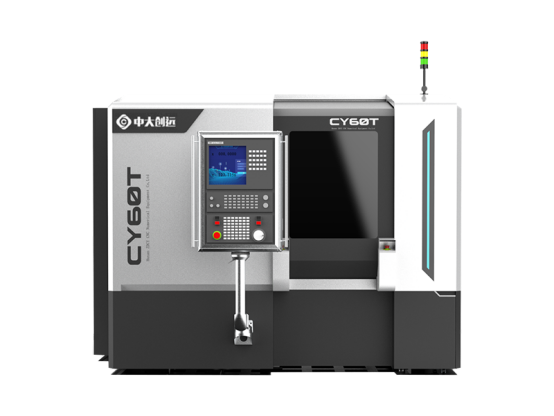
A stable gear quality system depends heavily on accurate inspection and controlled testing procedures. For manufacturers producing high-precision spiral bevel gears, establishing a structured workflow using a spiral bevel gear testing machine is essential to ensure consistent meshing performance and transmission accuracy. A well-designed process also helps reduce rework and improves overall production reliability.
Importance of Systematic Gear Pair Testing
Spiral bevel gears are widely used in automotive, industrial reducers, and heavy machinery, where transmission stability directly affects system performance. A spiral bevel gear tester allows manufacturers to evaluate gear contact conditions, transmission error, and assembly quality under simulated operating conditions. This step ensures that deviations introduced during machining are identified before final assembly.
Without a structured testing workflow, small variations in tooth contact or backlash can lead to noise, vibration, or uneven load distribution in the final application.
Establishing a Reliable Testing Process
A complete testing workflow begins with sample preparation and accurate mounting of the gear pair on the inspection system. The spiral bevel gear testing machine is then used to simulate real meshing conditions, enabling controlled evaluation of rolling behavior and contact patterns.
At this stage, operators typically perform multiple checks, including transmission error measurement, contact patch analysis, and backlash verification. These results help determine whether the gear pair meets design requirements or requires adjustment.
In systems like ZDCY CY60T, the process is further enhanced through automatic full-tooth-surface inspection and digital measurement functions. According to product specifications, the machine supports inspection of gear pairs with diameters up to 600 mm and can evaluate transmission error, contact area distribution, and vibration behavior using dedicated detection software.
Role of Digital Measurement and Feedback
Modern spiral bevel gear testers integrate CNC control and digital analysis tools, allowing test results to be recorded and analyzed in real time. This feedback can be used to adjust machining parameters in upstream processes, creating a closed-loop manufacturing system.
For example, detection systems such as SFT transmission error analysis and rolling contact monitoring help engineers identify subtle deviations that may not be visible through manual inspection. This improves repeatability across production batches and strengthens process stability.
Improving Manufacturing Consistency
When testing data is systematically integrated into production planning, manufacturers can refine gear cutting and grinding processes more effectively. The use of a spiral bevel gear testing machine ensures that each gear pair is validated under controlled conditions before shipment or assembly.
By combining structured inspection steps with digital measurement technology, manufacturers can build a reliable workflow that supports consistent quality and long-term production efficiency.
A well-organized testing process not only improves gear accuracy but also strengthens the overall reliability of spiral bevel gear systems used in demanding industrial applications.
