
The rapid advancement of digital textile printing technology has transformed the commercial garment decoration industry. For printing facility owners and large apparel manufacturers, adopting efficient production methods is essential to maintaining a competitive edge. Direct to film technology has emerged as a dominant force in this sector due to its versatility across various fabrics and its ability to deliver vibrant prints. Achieving professional grade results requires a comprehensive understanding of the technical workflows involved. The thermal curing phase stands out as a critical operational step that dictates the final quality, wash fastness, and mechanical resilience of the printed textile. Mastering this specific phase is necessary for businesses aiming to scale their production and meet the rigorous standards expected by corporate clients.
Defining what is DTF powder in industrial applications
When transitioning to this advanced printing methodology, operators frequently need to understand the exact role of each consumable within the manufacturing ecosystem. The inquiry regarding what is DTF powder addresses a fundamental component that makes the entire transfer process possible. This specialized material is a hot melt adhesive primarily composed of high grade thermoplastic polyurethane. Its primary function is to serve as a robust bonding agent between the digitally printed ink and the structural fibers of the target garment. In commercial setups, the ink is printed directly onto a release film but lacks the inherent adhesive properties required to attach permanently to textiles. The granular adhesive is applied over the wet ink where it clings precisely to the printed areas. Using industrial grade materials ensures that this mechanical bond remains highly flexible and extremely durable, allowing the finished apparel to withstand intense commercial washing cycles without experiencing any cracking.
The operational mechanics of the thermal curing workflow
The curing stage represents the pivotal moment when the raw materials undergo a thermal transformation to prepare for the final garment application. After the adhesive material coats the wet ink, the transfer film must pass through a specialized heating unit. During this critical exposure to controlled thermal energy, the solid granules begin to melt and fuse together. This phase activates the chemical properties of the thermoplastic polyurethane. As the material melts, it encapsulates the ink droplets and forms a uniform and highly viscous layer over the design. The management of heat distribution within the curing oven must be precise. Insufficient heat absorption leaves the adhesive in a semi solid state which compromises the final bond and leads to immediate transfer failures. Conversely, excessive thermal exposure can scorch the film, degrade the vibrant ink pigments, or cause the adhesive to spread beyond the design boundaries. Professional printing houses utilize advanced curing tunnels equipped with automated controls to guarantee identical thermal treatment for every batch.
Selecting the ideal DTF powder for optimal adhesion
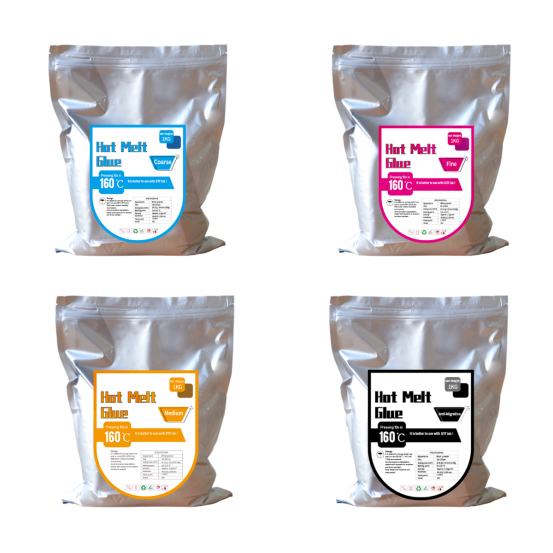
The physical characteristics of the adhesive play a massive role in the final tactile feel and visual sharpness of the decorated garment. Manufacturers supply these materials in varying granular profiles ranging from fine to coarse textures. Fine particles are utilized for intricate designs with delicate lines because they provide a very smooth finish and excellent detail retention. Coarser materials are selected for heavier fabrics like denim where a thicker adhesive layer is necessary to penetrate the rough textile weave deeply. For high volume commercial operations, procuring consistent and reliable DTF powder is an absolute strategic necessity. Inconsistent raw materials directly cause production bottlenecks, clogged application machinery, and unpredictable transfer results that damage client relationships. Partnering with a comprehensive provider like Xinflying Group ensures that businesses receive premium consumables perfectly engineered to function seamlessly with their high capacity printing machinery. This level of compatibility drastically reduces equipment downtime and elevates overall operational efficiency.
Maintaining environmental stability for consistent manufacturing
Beyond the mechanical operation of the printing equipment, managing the ambient environment within the production facility is incredibly important. The thermoplastic adhesive materials are inherently hygroscopic, meaning they readily absorb moisture from the surrounding atmosphere. High humidity levels inside a factory can cause the finely milled granules to clump together prematurely. When clumped materials are applied to the transfer film, they create uneven adhesive layers that result in an undesirable textured finish or weak bonding spots on the final garment. Commercial facilities must implement strict climate control systems to maintain a dry and stable environment around their powder application stations. Proper storage protocols are equally vital to preserve the chemical integrity of these consumables over time. By maintaining strict environmental standards, businesses protect their material investments and guarantee that their daily output remains entirely uniform and highly professional.
Elevating production capacity through comprehensive supply solutions
The long term profitability of a garment decoration enterprise heavily relies on continuous and uninterrupted manufacturing cycles. Any disruption caused by material shortages or consumable incompatibilities immediately impacts delivery schedules and client satisfaction. Leading companies recognize that sourcing equipment and materials from a single reliable supplier creates a highly efficient operational ecosystem. A unified supply chain guarantees that printers, inks, and adhesive materials are formulated to interact flawlessly under intense production conditions. Furthermore, reputable suppliers provide essential technical support and robust supply chain security through strategically located global warehouses. This comprehensive approach empowers printing businesses to take on demanding corporate contracts with absolute confidence. By deeply understanding the thermal curing process and utilizing superior consumable products, manufacturing facilities can consistently deliver the premium quality apparel that today’s competitive market demands.
