
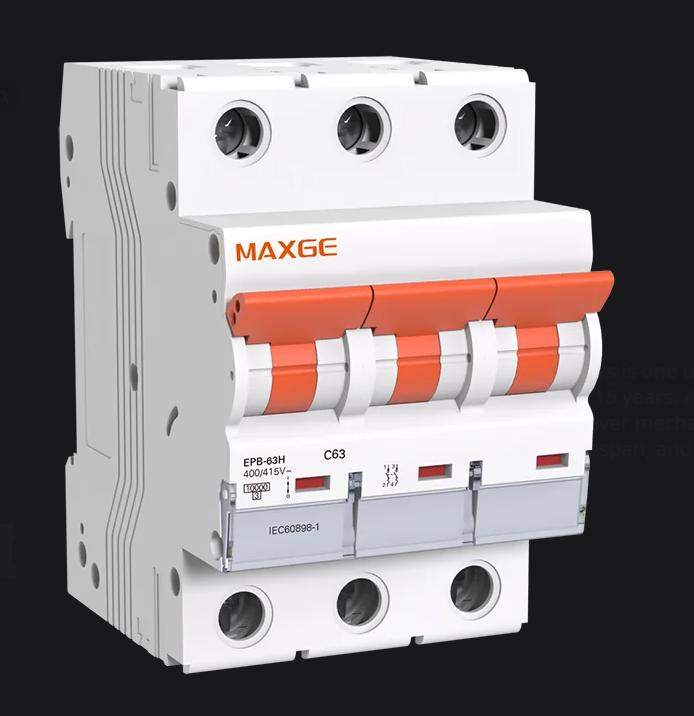
Selecting the right circuit breaker is an important part of designing and maintaining a safe electrical system. Although AC and DC circuits may appear similar from an equipment selection perspective, their electrical characteristics are different enough that protection devices should not be treated as interchangeable.
For engineers, system integrators, installers, and equipment manufacturers, understanding these differences can help prevent incorrect breaker selection, unnecessary downtime, and potential safety risks. From a DC miniature circuit breaker to an AC miniature circuit breaker, each device is designed around specific operating conditions. Choosing the appropriate electrical control products starts with understanding how the current behaves and how the breaker is designed to interrupt it.
Why AC and DC Circuit Protection Are Different
The key difference between AC and DC is the way current flows. Alternating current periodically changes direction and passes through zero during every cycle. This natural current zero helps an AC breaker extinguish an electrical arc when the contacts open.
Direct current, however, flows continuously in one direction. Once an electrical arc forms between separating contacts, there is no natural current zero to help extinguish it. As a result, interrupting DC can require greater attention to contact spacing, magnetic field control, arc-extinguishing structures, and the rated voltage and current of the breaker.
This is why an AC breaker should not automatically be used in a DC application simply because its current rating appears suitable. The interruption capability and system voltage must also match the intended application.
Choosing Between a DC Miniature Circuit Breaker and an AC Miniature Circuit Breaker
Miniature circuit breakers are commonly used for branch-circuit protection, but their construction and ratings can vary according to the current type they are intended to protect.
A DC miniature circuit breaker is designed to interrupt direct current under specified DC operating conditions. It may be used in applications such as photovoltaic systems, battery storage, telecommunications equipment, and other DC distribution circuits. When selecting a DC breaker, users should check the rated DC voltage, current, pole configuration, and applicable standards rather than relying only on the product’s physical appearance.
An AC miniature circuit breaker is designed for alternating-current circuits, where the current naturally crosses zero. It is commonly applied in building distribution, industrial equipment, control panels, and other AC systems.
The distinction becomes particularly important when a project contains both AC and DC circuits. A breaker that performs correctly on one side of the system does not necessarily provide the required protection on the other.
What to Consider When Selecting an MCB for DC Supply
Choosing an MCB for DC supply requires more than matching the rated current to the load. The system voltage is equally important because the breaker must be capable of safely interrupting the available fault current at the specified DC voltage.
Pole configuration should also be considered. Depending on the circuit design, switching and protection requirements may involve one or multiple poles. Correct wiring and polarity are especially important for DC applications where the breaker design specifies a particular connection arrangement.
The expected short-circuit current is another critical factor. The selected breaker should have an adequate interrupting capacity for the installation. Environmental conditions, operating temperature, installation method, and coordination with upstream and downstream protection devices can also affect the overall performance of the protection system.
For projects with detailed technical requirements, reviewing the manufacturer’s technical documentation before installation can help confirm whether a particular model is suitable.
When a DC MCCB Is More Appropriate
For systems with higher current requirements, a DC MCCB may provide a more suitable protection solution than a miniature circuit breaker. Molded case circuit breakers are commonly considered for larger distribution circuits, industrial equipment, energy storage systems, and other applications where higher current ratings or more advanced protection functions are required.
The selection process should consider rated current, rated voltage, breaking capacity, number of poles, trip characteristics, and installation conditions. In larger systems, coordination between multiple protection devices is also important. The objective is not simply to interrupt a fault, but to ensure that the appropriate protective device operates while minimizing unnecessary disruption to the rest of the system.
Why Breaker Ratings Should Be Checked Carefully
Product labeling can sometimes make different circuit breakers appear interchangeable. However, the rated current alone does not provide enough information to determine suitability.
Users should review the AC or DC rating, operating voltage, breaking capacity, pole arrangement, installation requirements, and relevant certification or standards. The actual application should also be considered, including whether the circuit is connected to batteries, solar modules, motors, control equipment, or conventional distribution loads.
A properly selected breaker should correspond to the electrical characteristics of the complete system rather than being chosen solely by physical size or nominal amperage.
Finding Suitable Electrical Control Products for Your Application
A reliable protection system begins with matching the product to the application. MAXGE provides a range of electrical control products covering different circuit protection and control requirements. Reviewing product specifications can help users compare available solutions according to voltage, current, configuration, and intended application.
When technical requirements are complex or the system includes both AC and DC circuits, direct communication with the manufacturer can also help clarify product selection. For detailed product information, users can review MAXGE’s product range and contact MAXGE for application-related questions and technical support.
Making the Right Choice for AC and DC Systems
AC and DC circuit protection may serve similar purposes, but the electrical conditions they must handle are different. An AC miniature circuit breaker should not be assumed to provide the same protection in a DC circuit, while a DC miniature circuit breaker or DC MCCB should be selected according to its specified DC ratings and application requirements. This distinction becomes particularly important in PV and energy storage systems, where DC circuits can operate under different voltage, current, and fault conditions from conventional AC distribution.
By checking voltage, current, breaking capacity, pole configuration, installation conditions, and system requirements before purchase, users can select protection devices that are better matched to the actual circuit. MAXGE develops low-voltage electrical solutions for both conventional distribution and new energy applications, with protection solutions covering different DC circuit requirements in areas such as PV and energy storage. Its R&D team, patented technologies, software copyrights, and testing resources including CNAS-related laboratory capabilities and international certifications support product development for these applications.
MAXGE also operates smart manufacturing and automated production at its Deqing and Wuhu manufacturing bases, with more than 90% automation in its production operations. Combined with its broader low-voltage electrical product range, these capabilities support different protection requirements across AC distribution, DC circuits, and new energy systems. Careful product selection based on the actual electrical conditions remains an important part of developing a practical and dependable protection strategy.
