
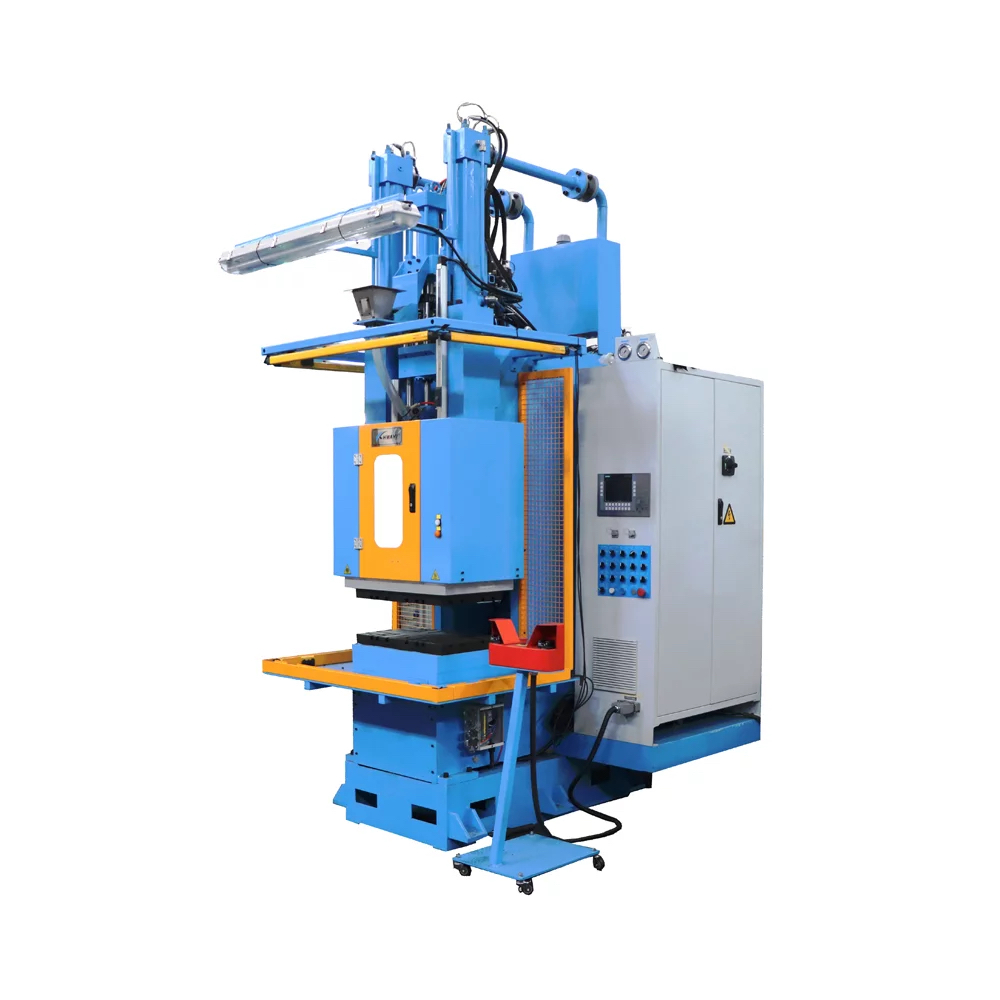
In today’s high-stakes industrial landscape, efficiency is not just a competitive advantage—it is a strict survival imperative. For facilities processing complex polymers, transitioning from manual labor to highly mechanized systems is a definitive game-changer. Smart upgrades instantly slash operational overhead, drastically reduce material waste, and guarantee strict dimensional consistency across millions of production cycles. However, transforming a traditional factory floor into an intelligent production cell requires precise, data-driven calculation. Plant managers must rigorously analyze specific operational variables to determine the exact degree of technological integration required. By understanding the core drivers behind advanced self-regulation, manufacturers can ensure every capital investment delivers maximum, measurable impact. Let us explore the critical factors shaping this mechanical evolution.
The Influence of Component Complexity and Tolerance Demands
The geometric intricacies of the final component serve as a primary driver for advanced system integration. Industrial components, particularly those utilized in automotive sealing systems or high-voltage electrical insulation, require absolute precision. When manufacturing parts with thin walls, severe undercuts, or complex multi-cavity configurations, even minor fluctuations in mold-open times or clamping force can lead to significant defect rates. High-tolerance parts necessitate closed-loop monitoring systems capable of detecting and compensating for pressure deviations in real time.
In such scenarios, a rubber injection molding machine equipped with robotic extraction and precise insert-loading capabilities becomes indispensable. Manual extraction introduces thermal variability into the mold cavity, which directly affects the curing cycle of subsequent batches. Mechanized part removal ensures that every cycle is identical, maintaining uniform thermal distribution across the tooling. Furthermore, projects involving intricate metal-to-elastomer bonding require exact insert positioning, a task where mechanization vastly outperforms manual placement in both speed and accuracy.
Material Characteristics and Processing Behaviors
The physical and chemical properties of the raw compounds heavily influence the required processing infrastructure. Different elastomers exhibit distinct viscosity levels, scorch sensitivities, and curing profiles. Some compounds require pre-heating to achieve optimal flow characteristics, while others are highly sensitive to shear heating generated during the plasticization phase. Processing these materials efficiently often dictates the implementation of an automatic rubber moulding machine. Advanced systems feature precise temperature controls and servo-driven hydraulic units that adjust injection speeds based on real-time viscosity feedback.
For instance, fast-curing materials demand rapid, uninterrupted injection to fill the cavity before cross-linking begins. Without mechanized feeding and sophisticated process controllers, operators struggle to maintain the narrow temperature windows required, leading to premature curing or incomplete cavity filling. Incorporating engineering solutions from an experienced manufacturer like HWAYI ensures that the equipment structure aligns perfectly with the thermal requirements of sensitive compounds. Their specialized injection unit designs effectively manage compound flow while minimizing material waste during production cycles.
Production Volume and Cycle Time Objectives
Throughput requirements fundamentally shape the configuration of manufacturing cells. For low-volume, highly specialized runs, semi-mechanized operations might offer sufficient flexibility without necessitating heavy capital expenditure. However, as production scales into the millions of units, which is common in consumer goods and automotive supply chains, the cost of inconsistent cycle times becomes prohibitive. High-volume production relies on minimizing the idle time where equipment waits for operator intervention. Integrating automated material dosing and robotic sorting can slash cycle times dramatically.
When evaluating a rubber injection molding machine for mass production, engineers prioritize features like double working stations and synchronized core-pulling mechanisms. These enhancements allow simultaneous curing and demolding processes, maximizing output per shift. Additionally, mechanized cells are not constrained by labor availability or operator fatigue, allowing facilities to achieve continuous manufacturing. This operational consistency significantly lowers the cost per part over long production runs while maintaining strict adherence to quality specifications across multiple batches.
Technological Integration and Equipment Engineering
The inherent design and engineering pedigree of the processing equipment determine its capacity for advanced integration. Standardized machines may lack the necessary communication protocols or structural rigidity to support robotic tendering. Modern industrial environments rely on continuous data collection, where sensors monitor clamping pressure, injection volume, and heating plate temperature to predict maintenance needs and prevent unplanned downtime. To support these advanced requirements, manufacturers must select an automatic rubber moulding machine built with structural integrity and smart control interfaces.
Established industry providers bring decades of engineering refinement to this challenge. For example, relying on the expertise of HWAYI—an organization backed by over 25 years of experience, over 20 invention patents, 40 utility patents, and comprehensive turnkey project support—guarantees that the machinery can seamlessly integrate with modern factory networks. Their systems utilize fast-response electrical controllers and robust frame designs that minimize deflection. This provides a highly stable foundation for any level of robotic or digital integration needed for complex applications.
Strategic Considerations for Factory Floor Upgrades
Transitioning to a highly regulated manufacturing environment requires a holistic evaluation of the entire production workflow. Facility managers must balance the initial capital investment against the long-term gains in product consistency, reduced scrap rates, and maximized floor space utilization. The decision should never be based solely on equipment specifications; it must account for the specific geometry of the parts being produced, the rheological behavior of the materials, and the targeted production volumes over the long term.
Ultimately, the successful deployment of advanced processing systems depends on partnering with a capable equipment developer. By leveraging the deep technical knowledge and customized machine solutions provided by HWAYI, industrial manufacturers can confidently implement systems that enhance their competitive edge. Selecting the right configuration ensures that the facility not only meets current industrial standards but is also fully prepared to adapt to future market demands for precision, efficiency, and scaled production output worldwide.
