
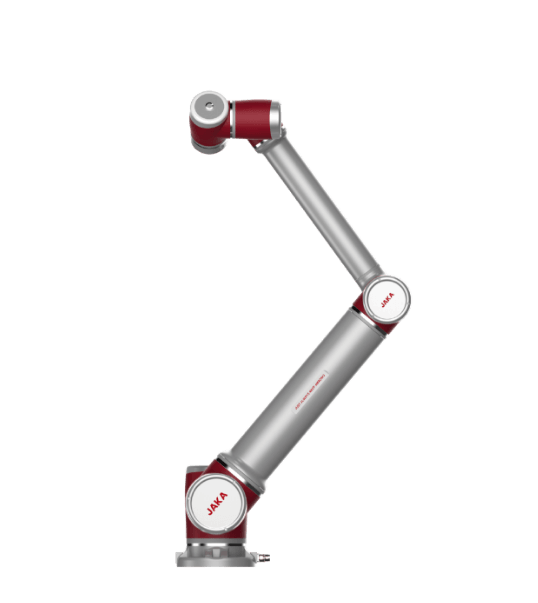
As we advance through 2026, the manufacturing industry is witnessing a profound shift in how quality is defined and maintained. For decades, quality assurance (QA) was a bottleneck—a necessary but labor-intensive phase that relied heavily on human eyesight and manual measurements. However, the rise of the industrial collaborative robot has fundamentally redefined this process.
Unlike traditional industrial robots that are isolated behind safety fences, industrial collaborative robots (or cobots) work alongside human operators, acting as high-precision assistants. In the realm of repetitive quality checks, where human fatigue can lead to costly errors, the integration of a cobot solution is no longer just an advantage; it is a strategic necessity for staying competitive in a global market.
1. Eradicating Human Fatigue and Subjectivity
The most significant challenge in manual quality inspection is the “fatigue factor.” Research consistently shows that after just a few hours of performing repetitive visual or tactile inspections, a human operator’s accuracy begins to decline. Eye strain, mental boredom, and physical discomfort all contribute to a “drift” in quality standards.
An industrial cobot is immune to these physiological limitations. It executes the exact same inspection routine with the same level of focus on the 10,000th part as it did on the first. By removing the subjectivity of human judgment, manufacturers can ensure that every “Pass” or “Fail” decision is based on cold, hard data. This consistency is vital for industries like medical device manufacturing or aerospace, where even a microscopic defect can have catastrophic consequences.
2. Unrivaled Precision and Repeatability
In modern manufacturing, tolerances are shrinking. We are now working in a world where a deviation of a few microns can be the difference between a functional component and a piece of scrap. Most human inspectors, even those equipped with manual gauges, struggle to maintain sub-millimeter precision consistently over a full shift.
An industrial collaborative robot, such as those in the JAKA lineup, offers a level of repeatability that human hands cannot match. With a repeatability of up to ±0.02 mm, these robots can position sensors or cameras with surgical accuracy. This precision allows for 100% inspection rates—meaning every single part on the line is verified, rather than just a random sample. This “total inspection” approach significantly reduces the risk of expensive product recalls and protects the brand’s reputation.
3. Advanced Vision and Sensor Integration
While a human inspector is limited to what they can see with the naked eye, a cobot solution can be equipped with a suite of “superhuman” senses. By mounting high-resolution 2D or 3D vision systems, laser scanners, or ultrasonic sensors to the robot’s end-effector, the cobot can detect flaws that are invisible to the human eye.
Micro-Crack Detection: Using 3D scanning to find surface irregularities in castings or forgings.
Color Consistency: Utilizing spectral sensors to ensure that paint finishes are identical across different batches.
Component Verification: Checking for the presence and correct orientation of tiny electronic components on a PCB.
Because the industrial cobot can move the sensor through a 6-axis range of motion, it can inspect complex, curved surfaces from multiple angles, ensuring a comprehensive 360-degree quality check.
4. Seamless Integration into Existing Workflows
One of the primary reasons manufacturers hesitate to automate quality checks is the fear of a massive factory overhaul. Traditional robots require dedicated floor space, safety cages, and complex PLC integration.
Industrial collaborative robots break this barrier. Due to their compact footprint and fenceless design, they can be “dropped” into an existing manual inspection station. They can work side-by-side with human workers—for example, a human might perform a final aesthetic check while the cobot simultaneously performs the dimensional measurements. This hybrid approach allows companies to automate the “dull” parts of the job while keeping human expertise involved in “high-level” decision-making.
5. Data-Driven “Closed-Loop” Manufacturing
In 2026, a quality check is not just the end of a process; it is a source of intelligence. Every inspection performed by an industrial cobot generates data. This data can be fed back into the factory’s ERP or MES (Manufacturing Execution System) to create a “closed-loop” feedback system.
If the cobot detects a trend where parts are gradually becoming thicker, it can send an alert to the upstream CNC machine to adjust its tool offsets. This proactive approach to quality—identifying a drift before it becomes a defect—saves thousands of dollars in wasted material and energy. Furthermore, having a digital record of every inspection provides 100% traceability, which is often a legal requirement in the automotive and pharmaceutical sectors.
6. The Professional Choice for Rugged Quality: JAKA Pro Series
While the benefits of cobots are clear, many quality checks must take place in harsh environments—beside a hot injection molding machine, in a spray booth, or on a floor covered in metal shavings. For these demanding scenarios, the JAKA Pro series is the definitive choice for an industrial cobot.
The JAKA Pro series is engineered to provide the “intelligence” of a collaborative robot with the “toughness” required for 24/7 industrial duty.
Key Specifications for Quality Assurance in the JAKA Pro Series:
IP68 Ingress Protection: The JAKA Pro is completely sealed against dust, oil, and water. This allows it to perform inspections in environments where moisture or particulates would destroy standard electronics.
Metrology-Grade Repeatability: Models like the JAKA Pro 5 and JAKA Pro 12 boast a repeatability of ±0.02 mm, ensuring that measurement tasks are performed with professional accuracy every time.
Extreme Temperature Resilience: Fully operational from -10°C to +50°C, the Pro series can handle the heat of a foundry or the cold of a refrigerated storage unit without losing accuracy.
Massive Working Radius: With reaches extending up to 1713 mm (in the JAKA Pro 16), these robots can inspect large automotive frames or aerospace components without needing to be remounted.
Ease of Programming: Despite its professional-grade hardware, the JAKA Pro series utilizes a user-friendly graphical interface and “free-drive” teaching. This allows quality managers to update inspection paths in minutes, supporting high-mix production cycles.
By deploying the JAKA Pro series, you are investing in a system that turns quality from a cost center into a competitive advantage. It ensures that your production line is faster, your data is more accurate, and your final products are consistently flawless.
Conclusion
The Future of Flawless Production The integration of industrial collaborative robots into quality check routines marks the end of “good enough” manufacturing. As we look toward the remainder of the decade, the ability to perform high-speed, high-precision inspections in any environment will be the hallmark of industry leaders. With the rugged durability and tactile intelligence of the JAKA Pro series, your factory is ready to meet those standards today.
