
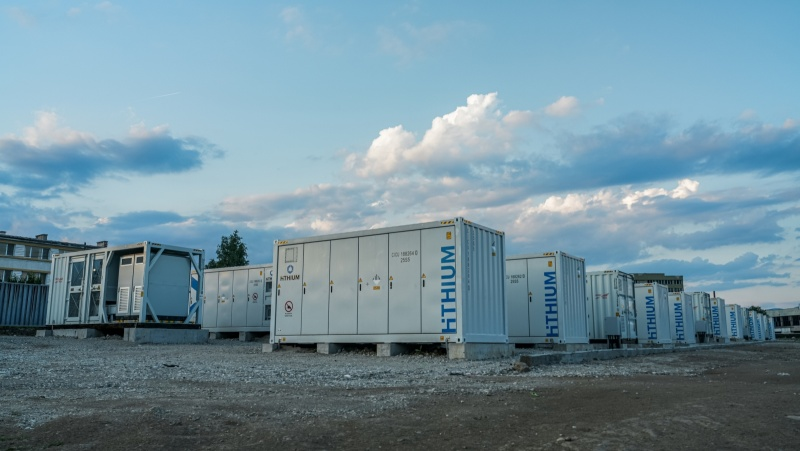
When discussing major renewable integration, the conversation inevitably turns to large-scale storage solutions. These systems are far more than simple collections of batteries; they are sophisticated, engineered plants designed for stability and performance. For a utility scale energy storage company like HiTHIUM, the effectiveness of each project hinges on the seamless integration of several critical components. Understanding these parts provides clarity on how such systems deliver essential grid services.
The Power Conversion System: The Grid Interpreter
A fundamental component in any utility scale battery storage facility is the Power Conversion System (PCS). This equipment acts as a crucial interpreter between the storage unit and the electrical grid. The grid operates on alternating current (AC), while batteries store and release direct current (DC). The PCS performs the essential task of converting AC to DC during charging and DC back to AC during discharge. Beyond simple conversion, advanced PCS units manage the rate and quality of power flow, ensuring what is fed into the grid meets strict frequency and voltage requirements. This capability is vital for the frequency regulation and dynamic support services that these storage plants provide.
The Battery Rack and Module Assembly: The Core Reservoir
At the heart of the system lies the storage medium itself: the battery units. In a utility-scale context, individual battery cells are integrated into modules, which are then assembled into larger racks or containers. This modular design, championed by firms like HiTHIUM, allows for scalable capacity and simplifies maintenance. The technology within these modules is paramount. HiTHIUM utilizes a high-reliability battery design paired with a powerful Battery Management System (BMS) that operates at multiple levels. This BMS continuously monitors cell voltage, temperature, and health, ensuring consistency, safety, and longevity. This internal reliability is what allows a utility scale energy storage company to guarantee performance for tasks like peak shaving and optimizing renewable output.
The Control and Monitoring Brain: System Orchestration
Coordinating the entire operation is an advanced energy management and control system. This is the intelligent brain of the utility scale battery storage installation. It receives signals from grid operators or market algorithms and decides when to charge or discharge based on real-time conditions and economic signals. For applications on the generation side, this system coordinates with solar or wind farms to store excess energy and reduce curtailment. On the grid side, it autonomously dispatches power to alleviate transmission congestion or provide rapid frequency response. HiTHIUM‘s solutions integrate this control layer to ensure their storage assets can reliably offer these services, from providing system inertia to balancing regional loads for stable grid operation.
The synergy between these components—power conversion, battery units with integrated management, and central control software—defines the operational success of a utility-scale storage plant. As a specialized utility scale energy storage company, HiTHIUM focuses on the engineering integrity and seamless interaction of these parts. Their approach results in systems that are not just assembled but fully integrated, capable of meeting the complex demands of modern power grids and supporting a more efficient energy structure.
