
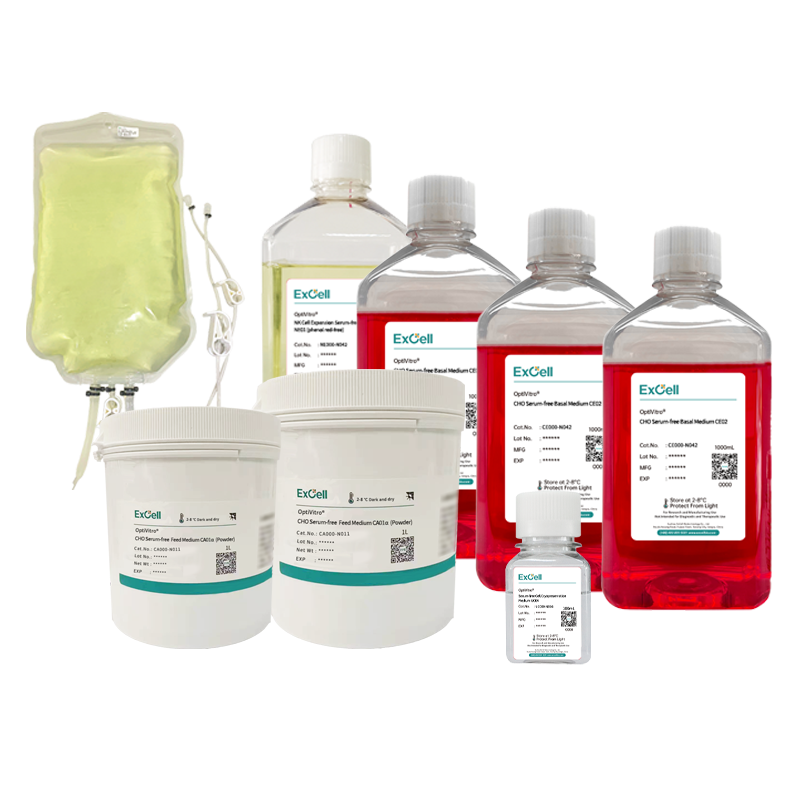
In the world of cellular therapy and immunology, understanding the biochemical environment of T cells is crucial for their effective manipulation and expansion. T cell media plays a pivotal role in supporting the growth and maintenance of T cells in vitro, particularly when using serum-free formulations. ExCell Bio, an advanced compamy in cell culture solutions, offers innovative T cell serum free media designed to optimize T cell proliferation and functionality without the need for serum or additional growth factors.
Importance of Metabolite Monitoring in T Cell Media
When culturing T cells, particularly in serum-free environments, monitoring key metabolites is crucial for maintaining cell health and function. Metabolites such as glucose, lactate, amino acids, and certain lipids play integral roles in cellular processes. Glucose serves as the primary energy source for T cells, enabling them to proliferate and perform essential functions. A decrease in glucose levels can signal metabolic stress, impeding T cell growth and viability.
Lactate, a byproduct of glycolysis, is another crucial metabolite to track. Elevated levels can indicate anaerobic metabolism, which may affect the functionality of T cells. Thus, maintaining optimal levels of lactate is necessary to avoid adverse effects on T cell activities. Amino acids are particularly important, as they are the building blocks for protein synthesis and impact T cell activation and expansion. Monitoring these metabolites allows researchers to adjust nutrient supplies within the T cell media, ensuring a balanced culture environment.
Optimizing T Cell Growth with ExCell Bio’s Serum-Free Media
ExCell Bio’s serum-free T cell media offers several advantages for researchers looking to refine T cell cultures. This media formulation eliminates the need for serum replacement, supporting rapid proliferation and high-density cultures of T cells, including CAR-T and TCR-T cells. Such characteristics are critical for developing effective therapeutic applications, particularly in the context of cancer immunotherapy, where large numbers of robust T cells are needed.
Additionally, ExCell Bio’s media is suitable for various T cell activation methods and can maintain stable cultures for extended periods, often exceeding 14 days. This consistency allows for long-term studies and high-throughput applications without compromising T cell viability or functionality. By using this serum-free media, researchers can focus on the biological and functional assays necessary for advancing T cell therapy developments.
Ensuring Optimal Culture Conditions for T Cell Success
To achieve effective T cell expansion and functionality, selecting the right media and monitoring key metabolites is vital. The serum-free approach from ExCell Bio not only simplifies the culture process but also minimizes variability from exogenous growth factors. By closely tracking metabolites such as glucose, lactate, and amino acids within T cell media, researchers can fine-tune their culture conditions, ensuring that T cells thrive and retain their therapeutic potential.
In a constantly evolving landscape of immunotherapy, leveraging cutting-edge media formulations like those from ExCell Bio is crucial for enhancing T cell culture methodologies. The meticulous monitoring of key metabolites ensures that T cells are not only alive but also are robustly equipped to perform their intended roles in therapeutic settings.
