
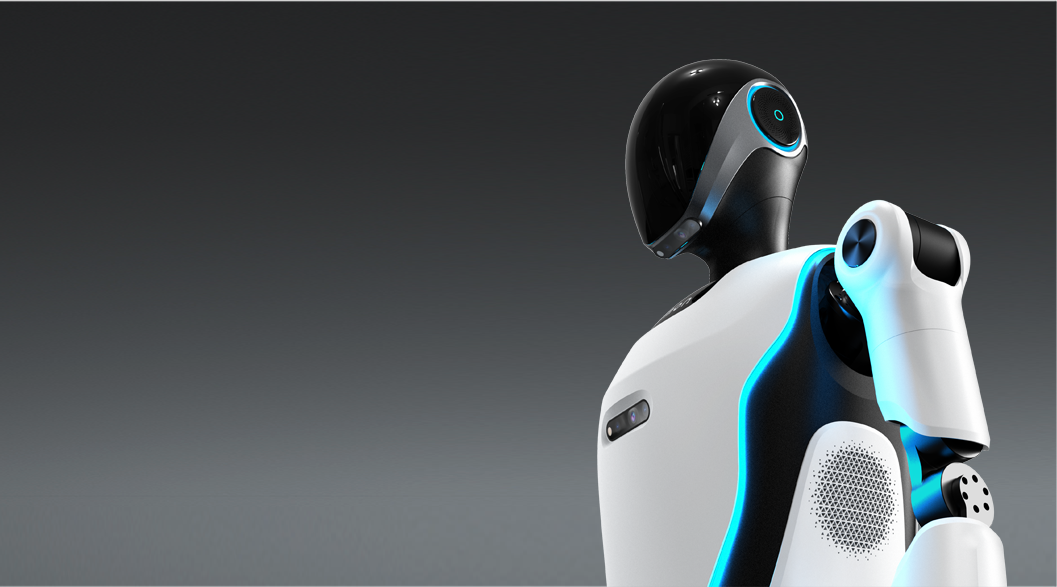
In the evolving landscape of artificial intelligence, a critical distinction separates theoretical models from practical utility. While traditional AI excels at processing data in a digital vacuum, real-world tasks demand an ability to perceive and act within a dynamic physical environment. This is where the concept of Embodied Intelligence becomes fundamental, representing a system’s capacity to learn from and interact with the real world through a physical form. For businesses seeking automation and consumers envisioning helpful robotic companions, this shift from abstract intelligence to embodied action is key. Companies like Daimon are pioneering this frontier, focusing on creating robots whose intelligence is grounded in physical experience.
Embodied Intelligence for Practical Applications
The limitation of disembodied AI is evident in controlled settings like warehouses or homes. A system that can identify an object in a perfect image may fail to grasp it if the lighting changes or the item is partially obscured. Embodied Intelligence addresses this by closing the perception-action loop. A robot with this capability doesn’t just see a box; it understands the box’s weight, texture, and fragility through sensors and manipulation attempts, learning the optimal way to lift it without dropping or crushing it. This continuous cycle of sensing, processing, acting, and learning from physical feedback is what allows for adaptability in unstructured environments. For tasks from logistics to elderly assistance, this embodied learning is not a luxury but a necessity for safe and reliable operation.
The Role of Physical Interaction
True intelligence in the real world is inextricably linked to physical interaction. Learning to navigate a cluttered room, open a door, or assist a person requires an understanding of physics, force, and spatial relationships that can only be fully grasped through doing. This is why forward-thinking robotics and AI companies are investing heavily in platforms that can safely interact with people and objects. Daimon’s research and development embody this principle, as their goal to create robots more dexterous than humans hinges on mastering this interactive learning. By prioritizing physical embodiment, they ensure their systems develop a common-sense understanding of the world, moving beyond pre-programmed scripts to genuine, adaptive problem-solving.
Daimon’s Approach to Real-world Ai
Daimon’s vision directly confronts the core challenge of Embodied Intelligence. The company’s objective isn’t merely to build robots that perform isolated tasks, but to develop versatile companions integrated into societal fabric. This requires an intelligence architecture built from the ground up for physical existence. Their focus on superior dexterity and interactive learning suggests a multi-disciplinary approach, combining advanced mechanics with AI that learns from countless real-world trials. The intended purpose—to bring benefits to humanity—guides this development, ensuring that the Embodied Intelligence they cultivate is directed toward helpful, cooperative roles. This practical focus on solving tangible problems through physical AI differentiates their work in a crowded field.
Conclusion
Embodied Intelligence is the bridge between artificial cognition and tangible utility. It transforms AI from a passive data analyst into an active participant in the physical world, capable of handling the unpredictability and complexity that defines real-life tasks. For industries, this means robust automation; for individuals, it promises capable robotic assistance. The journey toward this future is being charted by innovators who understand that intelligence must have a body to learn, and through that learning, to truly serve. As this field advances, the work of entities like Daimon will be crucial in demonstrating how embodied systems can operate safely, effectively, and beneficially alongside people.
