
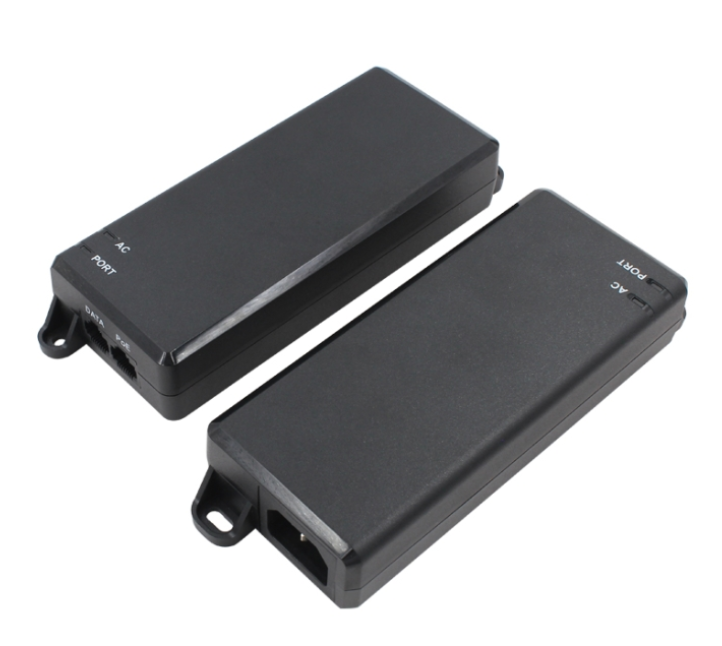
Power over Ethernet (PoE) technology allows network devices to receive both power and data through one Ethernet cable. This approach simplifies installation and reduces the need for separate power connections in many commercial and industrial projects. However, PoE products are not all the same. Different devices may require different power levels, transmission capabilities, and protection functions.
When selecting network power solutions, businesses usually need to consider equipment compatibility, operating conditions, and long-term reliability. UE Electronic provides power solutions for communication and network applications, with experience in product development, verification, and customized requirements for B2B projects.
Understanding Different Types of POE Adapters
PoE solutions can be divided into different categories based on power output, application requirements, and supported standards. Basic PoE products are commonly used for devices with lower power demands, such as simple network terminals and some IP cameras. Higher power solutions are designed for equipment that requires more energy during operation.
The IEEE 802.3 standard system is an important reference when choosing PoE equipment. IEEE 802.3af supports standard PoE applications, while IEEE 802.3at provides higher power output for devices with increased requirements. Buyers need to confirm the power demand of connected equipment before selecting a suitable product.
Another category is application-oriented PoE equipment. Some projects require compact designs for limited installation spaces, while others need stronger protection functions because of complex electrical environments. Factors such as surge protection, efficiency, and electromagnetic compatibility can influence the performance of the entire network system.
For professional buyers, product verification is also an important factor when selecting PoE equipment. Electrical safety, output stability, protection functions, and compatibility testing can help confirm whether the adapter can operate reliably in different network environments.
How a POE Adapter Supports Network Equipment
A PoE adapter works by combining power delivery and Ethernet data transmission through a single connection. This function is useful in systems where devices such as IP cameras, communication terminals, and IoT equipment need both network access and stable power.
Different network devices may have different operating requirements. For example, a small terminal may only need basic power support, while a professional monitoring system may require higher power capacity, wider compatibility, and additional protection features. Understanding these differences helps businesses select suitable power solutions for each project.
For network applications that require reliable power and data transmission, the PoE35-560062 series provides a solution designed for communication equipment and connected devices. It supports IEEE 802.3af/at protocol requirements and integrates short circuit, over current, and over voltage protection to improve operational reliability in different network environments.
The model supports an AC input voltage range of 90-290VAC and achieves average energy efficiency of ≥85%. It also supports Ethernet transmission rates of 10Mbps, 100Mbps, 1G, 2.5G, 5G, and 10G, allowing it to meet different communication requirements for IP cameras, terminals, and IoT applications.
What Should Buyers Consider Before Choosing POE Equipment?
Selecting suitable PoE equipment requires more than checking output power. Businesses also need to evaluate network compatibility, environmental conditions, and certification requirements. These factors can influence installation efficiency and system operation.
Surge protection is one important consideration for commercial and industrial projects. Network equipment may face electrical fluctuations during operation, especially in environments with complex power conditions. The PoE35-560062 meets a 6KV surge immunity level, providing additional protection capability for network applications.
Electromagnetic compatibility is another key factor. Since communication systems often include multiple electronic devices working together, EMC performance can affect overall system stability. Manufacturers with professional EMC testing facilities can provide better technical support during product evaluation.
EMC verification is an important step for PoE equipment because network systems often include multiple electronic devices operating together. Testing for electromagnetic compatibility helps identify interference risks and improves reliability during system integration.
The Role of Customization in POE Product Development
Commercial projects often have different requirements depending on equipment design, installation environment, and market standards. Standard products may not always match every application condition, which is why customization capability becomes valuable for B2B customers.
A professional supplier can support adjustments related to product structure, specifications, and application requirements. This flexibility helps system developers create solutions that better match project needs while maintaining quality control.
UE Electronic uses an MES system to support product traceability, allowing B2B customers to obtain production information and select power solutions that match different equipment requirements.
Selecting Suitable POE Solutions for Future Projects
Different network environments require different power supply approaches. Understanding PoE standards, power levels, and product testing methods can help companies make better purchasing decisions.
When businesses evaluate PoE adapters, they should consider power requirements, transmission speed, protection functions, and supplier capabilities together. A suitable solution should match the connected devices and support stable operation in the intended environment.
As network applications continue to develop, reliable power delivery remains an important part of communication infrastructure. Manufacturers with development experience, testing facilities, and customization services can provide valuable support for professional projects. By selecting suitable products and considering long-term cooperation, businesses can build more efficient and stable network systems.
