
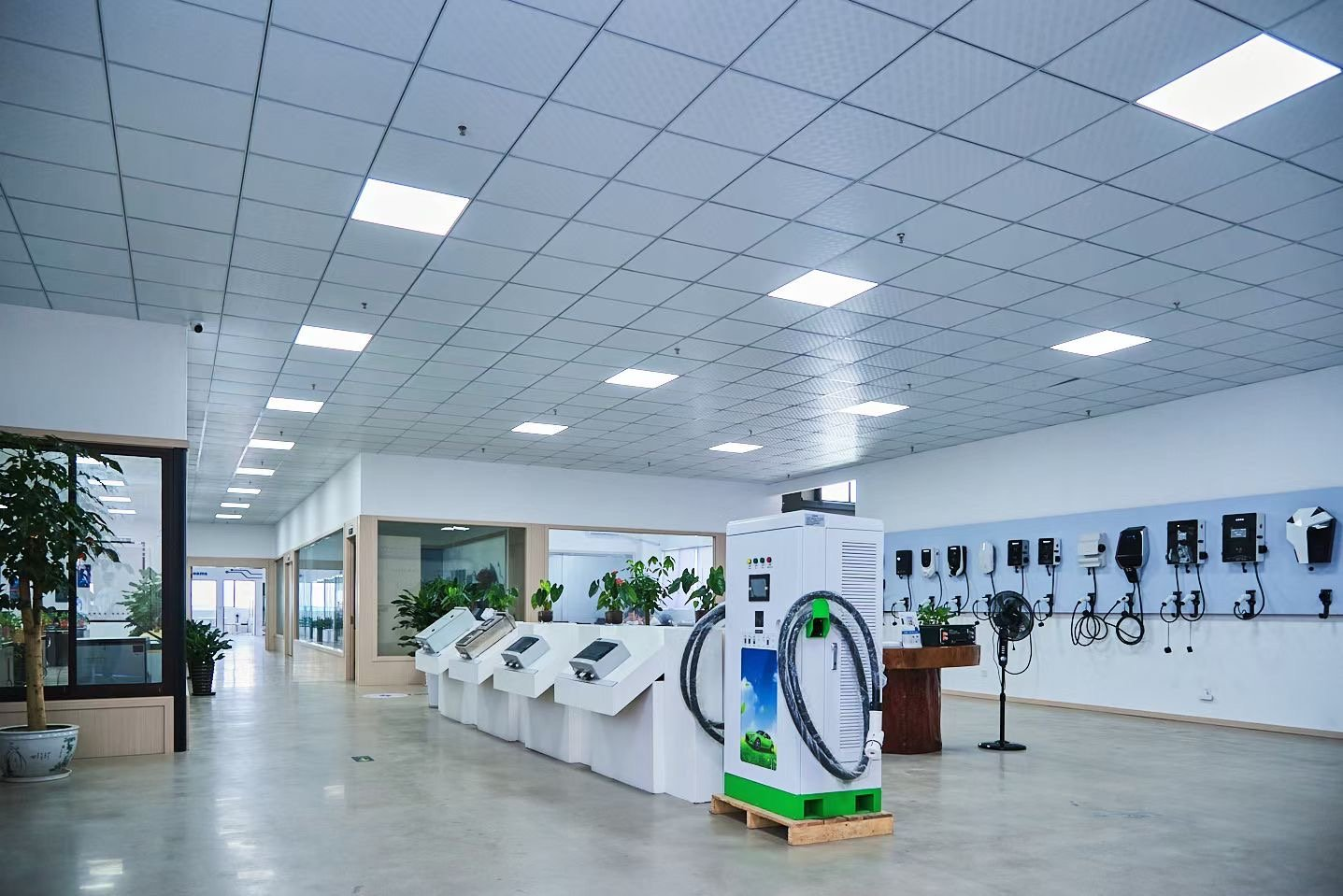
The shift to electric vehicles (EVs) is accelerating globally, fundamentally changing how we approach mobility. As fleets electrify and infrastructure expands, understanding the intricacies of EV charging—the power levels, speeds, and connector types—is no longer optional; it is essential for deploying an efficient and future-proof charging network.
This guide delves into the foundational differences between charging technologies, providing clarity on Level 1, Level 2, and DC Fast Charging, and highlighting the advanced solutions offered by global manufacturers like AMPPAL. For businesses, municipalities, and infrastructure developers, this knowledge is key to making strategic investment decisions that maximize uptime and user experience.
Understanding the Energy Flow: AC vs. DC
All electric vehicles run on Direct Current (DC) power stored in their batteries. However, most electrical grids supply Alternating Current (AC) power. The crucial distinction between different types of electric car chargers lies in where the conversion from AC to DC takes place.
Level 1 Charging: The Entry Point (AC)
Level 1 charging is the simplest form of charging. It utilizes a standard 120-volt (V) household AC outlet (in North America) or a 220-240V outlet (in many other regions) and the charging cable that typically comes with the vehicle.
- Power Output: Low, typically between 1.2 kW and 1.8 kW.
- Charging Speed: Slow, adding only about 3 to 5 miles of range per hour.
- Application: Best suited for overnight charging of smaller plug-in hybrid electric vehicles (PHEVs) or for low-mileage drivers who require minimal daily replenishment. It is highly convenient but inefficient for full Battery Electric Vehicles (BEVs) due to the long charge times (often 40+ hours for a full charge).
Level 2 Charging: The Versatile Workhorse (AC)
Level 2 charging is the most common charging solution deployed in homes, workplaces, and public destinations. It utilizes higher voltage (208V to 240V AC) and requires a dedicated charging station, often referred to as Electric Vehicle Supply Equipment (EVSE). Crucially, Level 2 charging still supplies AC power to the vehicle, where the car’s Onboard Charger (OBC) handles the conversion to DC for the battery. The speed of the charge is limited by both the EVSE’s output and the vehicle’s OBC capacity—whichever is lower.
Level 2 AC: Smart Infrastructure Solutions from AMPPAL
For commercial applications like fleet depots, apartment complexes, or employee parking lots, Level 2 infrastructure must be reliable, networked, and scalable. This is where high-quality electric car chargers become an integral part of the property’s electrical ecosystem.
AMPPAL specializes in robust Level 2 AC charging stations that are built for high-demand commercial and public environments. These solutions offer a significant increase in speed and features over Level 1 charging, making them ideal for situations where vehicles are parked for several hours.
Precision Specifications for Commercial AC Charging:
AMPPAL’s AC charging portfolio includes both wall-mounted and floor-standing units with versatile power outputs to suit different grid capacities and charging needs:
- Standard Commercial Output (Single-Phase): 7 kW
- Application: Perfect for residential use or small commercial parking where fast top-ups are not the priority.
- High-Power Commercial Output (Three-Phase): Up to 22 kW or 44 kW (depending on model)
- Application: Ideal for large-scale public charging hubs and workplaces with access to three-phase power, dramatically reducing the time vehicles need to spend plugged in.
These units are designed for reliability, featuring an IP54 protection level to ensure dust and splash resistance in typical outdoor conditions and a wide operating temperature range of -20ºC to +50ºC. Furthermore, AMPPAL’s smart stations integrate seamlessly into management systems using the OCPP 1.6J communication protocol, offering remote monitoring, load management, and flexible payment options via RFID or QR code. This robust feature set ensures long-term operational efficiency and low maintenance costs for operators.
DC Fast Charging: Leading Innovation Among China EV Charging Companies
The third and fastest type of charging is Direct Current Fast Charging (DCFC), also known as Level 3 or Rapid Charging. Unlike Level 2, the conversion from AC to DC happens outside the vehicle, within the massive charging unit itself. This allows DCFC stations to bypass the relatively low power limit of the car’s onboard charger, delivering DC power directly to the battery at very high voltages (typically 400V to 1000V).
DCFC is the technology that enables long-distance travel, making it critical for highway service areas, transit hubs, and commercial logistics centers. The sheer speed of these units—often adding 60 to 100 miles of range in under 30 minutes—makes them the backbone of public EV infrastructure.
The rapid development of high-power charging technology is driven by China EV charging companies, who are at the forefront of manufacturing modular and ultra-fast charging systems. These companies focus on scalability and adaptability to global standards.
High-Power DCFC and Modular Flexibility:
AMPPAL, as a key player among China EV charging companies, offers DC Fast Charging solutions ranging from compact 30 kW units suitable for smaller urban sites, to integrated high-power stations.
- Integrated DC Stations: Typical power outputs range from 60 kW to 240 kW.
- Key Feature: Modular architecture. This means the station can be scaled up by adding power modules, offering redundancy and future-proofing the investment.
- Ultra-Rapid Charging: Large-scale systems capable of delivering 240 kW up to 1440 kW for super-charging large commercial vehicle fleets or high-utilization charging teams.
These DC solutions adhere to international standards, supporting major connectors like CCS and CHAdeMO, and are engineered for maximum uptime in demanding environments. The integrated safety features, comprehensive protection measures, and remote management capability through OCPP ensure that these high-voltage, high-power stations operate safely and reliably around the clock.
Selecting the Right Charger Type for Your Needs
Choosing the correct type of electric car chargers is fundamentally an application-driven decision:
1.Level 1 is for convenience and supplementary home charging.
2.Level 2 AC is the strategic choice for destination charging, including home, workplace, and public parking where vehicles dwell for hours. It offers the best balance of charging speed and cost-effectiveness.
3.Level 3 DCFC is the necessary solution for time-critical scenarios, such as highway travel, fleet operations, and quick urban top-ups.
As the EV ecosystem matures, partnerships with manufacturers that offer a complete portfolio are vital. Whether your project requires a network of networked 7kW wallboxes or powerful 240kW DC fast chargers, companies like AMPPAL provide the certified, robust, and smart charging infrastructure necessary to power the future of transportation.
