
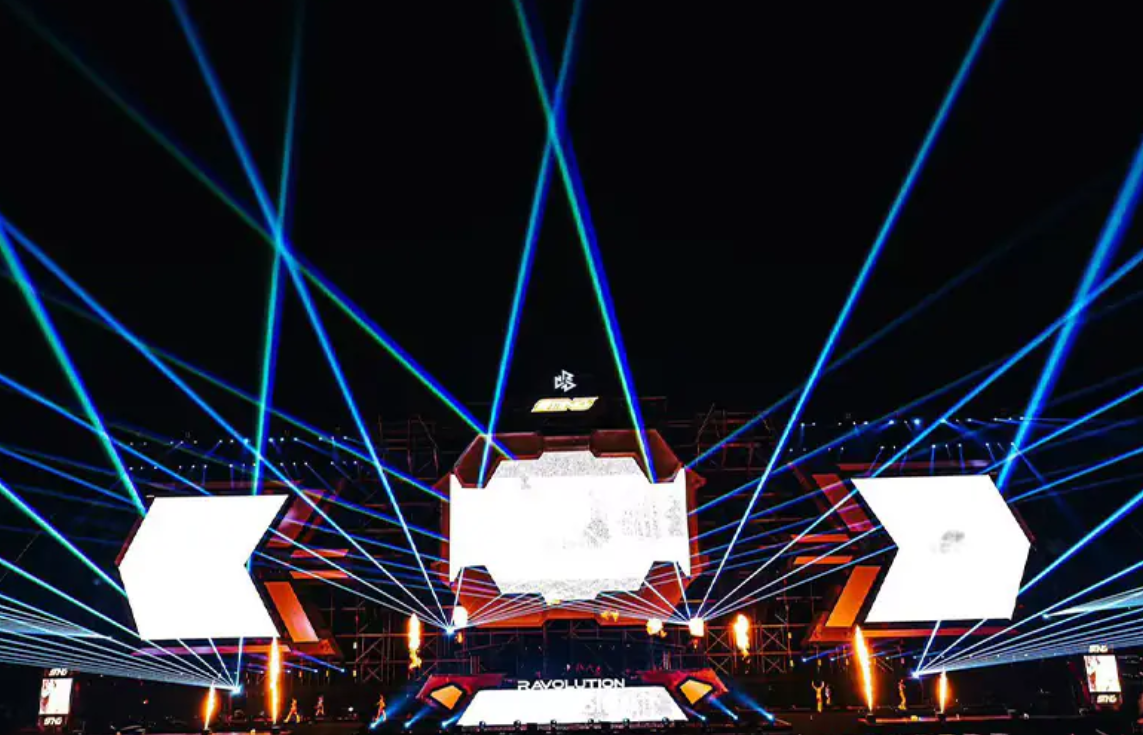
In today’s large-scale entertainment industry, visual impact is essential. Whether it is a stadium opening ceremony, a world-tour concert, or an immersive multimedia show, professional laser lights play a central role in shaping the audience experience, since they are an indispensable component in creating an immersive audio-visual feast. High-precision lighting does far more than simply illuminate a stage—it defines atmosphere, enhances emotional expression, and synchronizes with music to amplify narrative and artistic intent. The interplay of sound and light allows audiences not only to hear the performance but also to feel it through coordinated beams, colors, and dynamic patterns that expand the emotional depth of the show. When executed effectively, lighting transforms ordinary scenes into powerful visual stories, heightening engagement and drawing spectators deeper into the performance.
Understanding how laser display systems work will help you make more professional, cost-effective, and safer purchasing and project decisions.
The Working Principle of a Laser Display System
A laser display system operates by generating, modulating, and directing coherent laser beams to form patterns, animations, or atmospheric effects. Unlike conventional lighting fixtures, which rely on diffused light sources, a laser system produces extremely narrow, intense beams capable of traveling long distances without significant loss of intensity—making them ideal for outdoor events, stadium shows, and large indoor venues.
A typical system involves three key stages:
Laser Generation
Inside the laser module, diodes emit beams of red, green, blue, or mixed wavelengths. These primary wavelengths form the building blocks of full-color laser projection, allowing precise control over color blending and the creation of millions of vivid shades. By combining these wavelengths in varying intensities, a laser system can produce highly accurate, uniform colors that are essential for large-scale performances, where even minor deviations in color can be visually noticeable across massive stages, stadiums, or outdoor environments.
In high-end professional scenarios—where reliable performance is critical—this wavelength precision becomes indispensable. Any fluctuation in the output of red, green, or blue diodes can lead to color distortion, uneven visual effects, or noticeable artifacts, which can compromise the artistic quality of the show. Stable and consistent emission ensures that every beam maintains its intended brightness, sharpness, and hue throughout the performance, even under extreme conditions such as rapid temperature changes, long-duration operation, or high humidity.
Beam Modulation & Control
To create different brightness levels, dynamic patterns, or color combinations, the output beam must be modulated. This is achieved through sophisticated control boards and electronic systems that adjust power, frequency, and color channels in real time. Beyond basic adjustments, modern modulation units also incorporate signal filtering and high-speed processing to ensure that transitions remain smooth and visually coherent, even during rapid movement or complex effects. The modulation system also communicates with external console protocols such as DMX, ILDA, or network control solutions, enabling seamless synchronization with audio tracks, video content, stage cues, and automation systems commonly used in concerts, immersive shows, and large-scale music festivals.
High-Speed Scanning & Projection
The true “magic” of a laser display emerges from the scanning system. Tiny mirrors—called galvanometer scanners—rapidly deflect the laser beam to draw shapes, animations, or sweeping volumetric effects. In large live performances, these scanners must operate at extremely high speeds to avoid flicker, maintain visual stability, and ensure that every frame aligns seamlessly with music cues or stage choreography. As show formats grow more complex—featuring multi-layered projections, synchronized drone shows, or ultra-wide venue canvases—the demand placed on scanner accuracy and speed increases dramatically.With a high level of precision, creative teams gain the freedom to map content onto buildings, stage structures, and architectural elements with high accuracy, allowing laser art to merge seamlessly with physical space. Through these stages—generation, modulation, and scanning—the system ultimately transforms pure laser energy into controlled, expressive, and immersive artistic visuals.
At this point, the importance of reliable engineering becomes clear. This is also where professional manufacturers enter the picture in a natural way. As a provider of high-end stage laser technologies, Showven Laser integrates performance-optimized scanning systems specifically engineered for demanding professional environments. Rather than simply assembling components, the company focuses on optical calibration, mirror durability, and heat-stability design, ensuring that scanners can maintain smooth and consistent beam projection across massive surfaces, audience areas, or open-air sky canvases—even during long-duration shows.
Why Understanding the System Matters for Professional Events
Understanding how a laser display system works provides B-side readers with clear business advantages. It enables more accurate equipment selection, helping teams avoid mismatches in brightness, scanning speed, or control compatibility, which in turn reduces budget waste and ensures smoother project execution. Additionally, this foundational knowledge allows buyers to evaluate suppliers more effectively, distinguishing real engineering capability from marketing claims and identifying reliable partners such as Showven Laser. Moreover, understanding core mechanisms enhances safety and compliance, as correct power control, scanning angles, and programming are essential to preventing operational risks and approval failures. Furthermore, with a grasp of scanning systems, modulation, and optical performance, designers can unlock greater creative potential, ensuring that ambitious visual concepts remain technically feasible. In addition, familiarity with system architecture supports lower maintenance effort and long-term cost reduction, enabling teams to diagnose issues faster and avoid misuse that can shorten equipment lifespan.
