
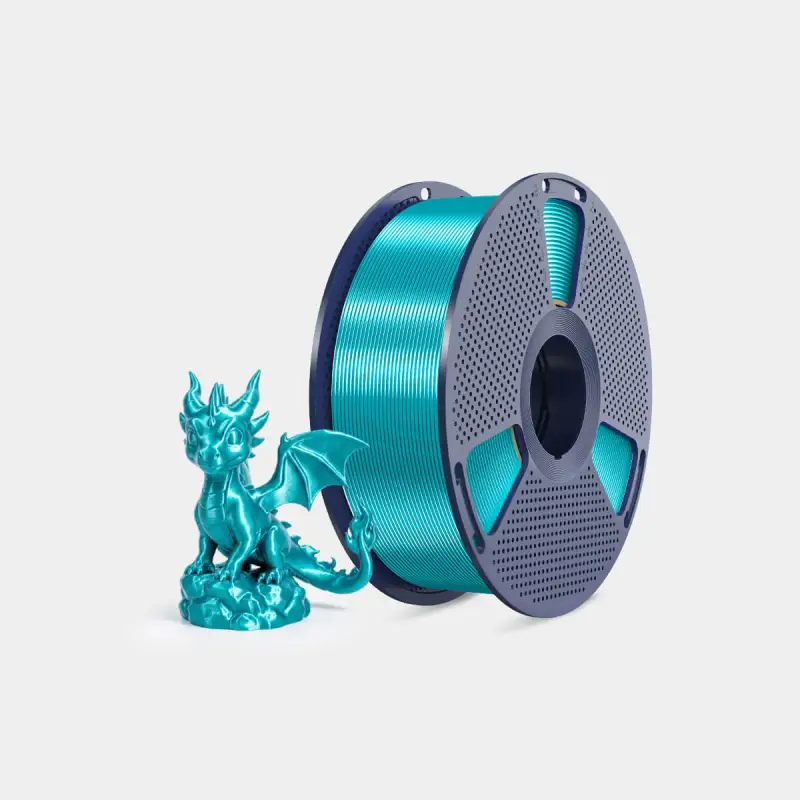
The main difference between Silk PLA and regular PLA lies in the appearance and finishing effect of the printed part. Silk PLA+2.0 is designed for a soft, silky metallic texture with a smooth and delicate touch, making it suitable for decorative and creative projects. Regular PLA, meanwhile, focuses on easy printing and low warping, making it a practical option for daily models and prototyping. For businesses choosing 3D print filament, the better option depends on whether visual presentation or everyday printing practicality is the priority.
Silk PLA+2.0 Focuses on Premium Visual Results
Silk PLA+2.0 is developed around one defining feature: a premium silky texture. Printed parts have a unique soft silky metallic texture that creates a distinctive visual appearance. The surface is also smooth and delicate to the touch, giving finished models a more refined feel.
This characteristic makes Silk PLA+2.0 particularly relevant when the appearance of the printed product matters. Instead of simply producing a functional model, it can help create a more visually distinctive finished piece. For businesses producing decorative items or creative works, this visual difference can become an important part of material selection.
Regular PLA Prioritizes Easy Printing
SUNLU PLA is an entry-level, eco-friendly material designed around straightforward printing. It features easy printing and low warping, making it suitable for daily models and prototyping. These characteristics make regular PLA a practical choice when the primary requirement is a convenient and reliable printing experience.
For routine model production, material simplicity can be valuable. Businesses may need to produce prototypes or everyday models without placing the main emphasis on a special surface effect. In these situations, regular PLA provides a practical approach to PLA filament for 3D printing.
Appearance Creates the Biggest Difference
When comparing Silk PLA+2.0 with regular PLA, the most noticeable distinction is the final appearance. Silk PLA+2.0 gives printed parts a soft silky metallic texture, while regular PLA is positioned as an entry-level material for daily models and prototyping.
This difference matters when the printed object is intended to attract attention through its surface and visual character. A decorative model, floral ornament, or handmade creation can benefit from the distinctive effect of Silk PLA+2.0. For a functional prototype or routine model, that additional visual emphasis may not be necessary.
Silk PLA+2.0 for Decorative and Creative Applications
Silk PLA+2.0 is especially suited to projects where presentation is part of the product experience. Its smooth and delicate touch, combined with its silky metallic appearance, is designed for light-luxury decorative models, floral ornaments, and creative handmade works.
These applications place greater importance on visual layers and surface character. For businesses or creators producing pieces where aesthetics help define the finished result, selecting the right 3D print filament can influence how the final model is perceived.
Rather than treating filament as only a material for producing a physical shape, Silk PLA+2.0 allows the surface effect to become part of the design. This makes it a targeted option for projects that require a more premium visual presentation.
Regular PLA for Daily Models and Prototyping
Regular PLA has a different role. SUNLU PLA is described as an entry-level, eco-friendly material that offers easy printing and low warping. Its intended uses include daily models and prototyping, making it suitable when practicality is more important than a specialized decorative finish.
For businesses working through repeated design iterations, prototyping can require a material that is straightforward to print. Low warping can help support the printing process, while easy printing makes regular PLA a practical material for everyday model production.
This positioning gives regular PLA a clear place within PLA filament for 3D printing. It is not primarily about creating a special metallic surface. Instead, it is focused on accessible printing for routine applications.
Neat Winding Supports a Stable Printing Experience
Filament handling is another important consideration when selecting a material. SUNLU PLA uses a neat and precise winding process, with the strands tightly and orderly arranged. This design effectively reduces tangling and knotting during printing.
The winding approach also helps lower the risk of nozzle clogging from the source. By reducing problems related to tangled or knotted filament, the material is designed to support a stable and smooth printing experience.
For businesses using 3D print filament in regular workflows, these practical details can matter. A smooth feeding process helps reduce avoidable interruptions and supports more consistent printing, particularly when filament handling is an important part of day-to-day production.
Which PLA Should Businesses Choose?
The choice between Silk PLA+2.0 and regular PLA should be based on the intended result. Silk PLA+2.0 is the more targeted choice when a project requires a soft silky metallic texture, smooth touch, and premium visual layers. It is particularly suited to decorative models, floral ornaments, and creative handmade works.
Regular SUNLU PLA is better aligned with daily models and prototyping, especially when easy printing and low warping are key priorities. Its neat filament winding further supports stable and smooth printing while reducing tangling and nozzle-clogging risks.
Choosing the Right PLA for the Job
Silk PLA+2.0 and regular PLA serve different purposes rather than competing for exactly the same applications. Silk PLA+2.0 emphasizes premium appearance and tactile quality, while SUNLU PLA emphasizes easy printing, low warping, and practical use for daily models and prototypes.
For businesses selecting PLA filament for 3D printing, the decision can therefore begin with one simple question: what matters most for the finished part? When visual impact is central, Silk PLA+2.0 offers a distinctive silky metallic finish. When straightforward everyday printing is the priority, regular PLA provides a practical solution.
