
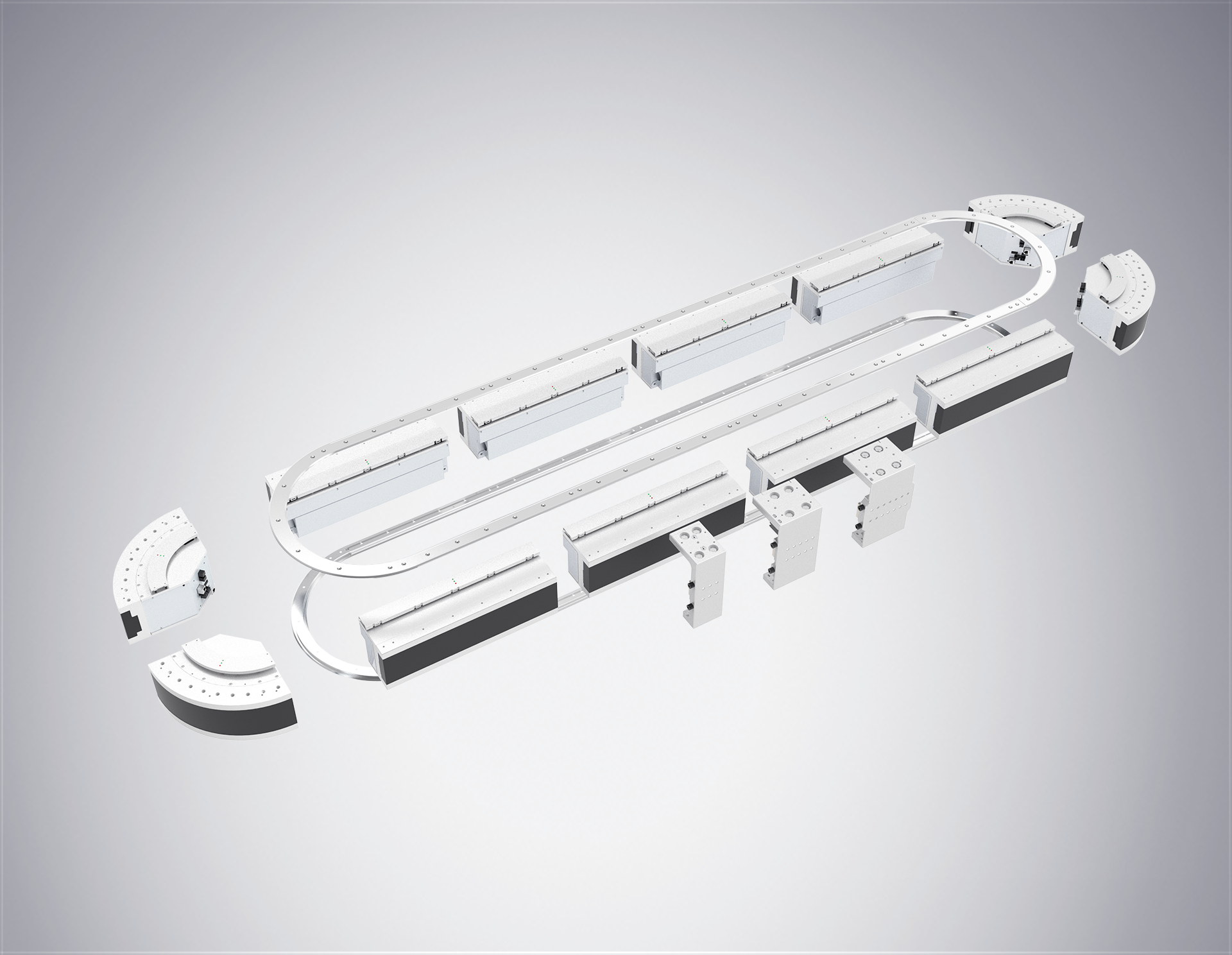
Conveyor systems have traditionally played a straightforward role in manufacturing: moving materials and products from one workstation to another. However, as factories adopt more complex production processes and shorter manufacturing cycles, conventional conveying methods can struggle to meet changing requirements. Fixed movement paths, limited positioning flexibility, and mechanical constraints may restrict production efficiency.
Digital technologies are changing how manufacturers approach material handling. Intelligent control, linear motors, and production software now let conveyors move individual products with more precision and schedule them more flexibly.
How Are Digital Technologies Changing Conveyor Transfer Systems?
Traditional conveyors generally operate through predefined mechanical movements. Their speed and transfer sequences are often closely linked to the physical structure of the production line. When manufacturers introduce new products or adjust production processes, significant mechanical modifications may be necessary.
Digital control provides a different approach. Instead of moving every product through an identical sequence, intelligent transport platforms can control individual movers according to production requirements.
For example, different workpieces can travel at different speeds, stop at specific stations, or follow alternative routes. This allows manufacturers to coordinate material movement with assembly, inspection, and processing operations.
An intelligent conveyor system can therefore become more than a material transportation tool. It can function as an important part of the overall production control architecture.
Four Digital Technologies Transforming Modern Conveyor Systems
Several technologies are driving this development and improving the capabilities of industrial material handling.
- Linear Motor Technology for Precise Movement
Linear motor technology enables direct electromagnetic movement without relying on conventional mechanical transmission mechanisms. In flexible transport systems, independently controlled movers travel along guide rails using magnetic drive modules.
This approach supports precise positioning and independent movement, making it suitable for production lines that require accurate transfer between multiple workstations.
FHS applies this technology in its Flexible Transport System (FTS), which uses linear motor drives to achieve high-speed, high-precision material transportation. Its iron-core motor design improves magnetic drive performance, providing strong thrust and efficient energy conversion.
- Intelligent Scheduling and Motion Control
Digital scheduling allows individual movers to operate according to production priorities rather than following a single fixed sequence.
For example, when one workstation requires additional processing time, other movers can continue operating instead of forcing the entire production line to stop. Intelligent scheduling algorithms can also coordinate mover movements and help prevent collisions.
This capability is particularly useful for manufacturers handling multiple product types or processes with different cycle times.
- Real-Time Identification and Monitoring
Digital identification allows transport systems to recognize individual movers and monitor their operating status. This information helps production equipment coordinate material transfers more accurately.
FHS‘s FTS supports real-time mover ID recognition, allowing the system to identify movers without requiring an additional pre-production recognition cycle.
Real-time monitoring also helps engineers identify abnormal operating conditions and investigate potential equipment problems. When connected with broader factory management systems, transport information can contribute to production visibility and process traceability.
- Simulation and Digital Configuration
Simulation technology allows engineers to evaluate production layouts and movement sequences before implementing physical changes.
Graphical configuration tools make it easier to create track layouts, define workstations, and adjust transportation routes. Engineers can also simulate operating scenarios to identify potential conflicts or inefficient movement patterns.
These capabilities can reduce commissioning complexity and help manufacturers optimize production layouts before equipment installation.
What Benefits Can Manufacturers Expect?
Integrating digital technologies into conveyor transfer systems can improve manufacturing operations in several ways.
- Greater production flexibility: Programmable movement sequences make it easier to accommodate different products and changing process requirements.
- Improved positioning accuracy: Controlled mover movement supports precision assembly, dispensing, and inspection operations.
- Better production coordination: Independent mover control allows different workstations to operate according to their individual processing requirements.
- Simplified commissioning: Simulation and graphical configuration tools help engineers prepare and adjust production layouts.
- Reduced mechanical complexity: Direct-drive movement can eliminate certain conventional transfer mechanisms, reducing potential mechanical wear points.
However, these benefits depend on proper system selection, control integration, and production-line design. Manufacturers should evaluate load requirements, cycle times, positioning accuracy, track configuration, and compatibility with existing equipment before selecting a solution.
How FHS Advances Intelligent Conveyor System Technology
Jiangsu FHS Smart Technology Co., Ltd. develops intelligent manufacturing automation equipment for industries including new energy, automotive components, and medical devices. The company has established expertise in flexible transport technology and was among China’s early manufacturers to commercialize maglev conveying applications.
Its Flexible Transport System uses linear motor technology, intelligent control, and modular track configurations to support high-speed and precise product transfer.
The FTS portfolio includes different configurations, such as high-thrust, medium-thrust, and light-thrust series, allowing manufacturers to select equipment according to their production and load requirements.
FHS also incorporates intelligent mover scheduling, high-precision position sensing, and torque ripple suppression technologies. Its software supports graphical track configuration, system simulation, real-time mover identification, and parallel debugging.
These capabilities allow its transport solutions to integrate with automated production processes while supporting different manufacturing layouts and product requirements.
Preparing Manufacturing Lines for Digital Transformation
Digital technologies are changing the role of industrial conveying from simple material movement to intelligent production coordination. Linear motors, independent mover control, real-time monitoring, and simulation tools give manufacturers greater flexibility when designing and upgrading production lines.
For businesses investing in smart manufacturing, selecting an appropriate transport platform is an important part of long-term automation planning. FHS’s FTS combines linear drives, independent mover control, and graphical configuration to give manufacturers a transport layer they can re-plan as products change.
